
Top 3 Takeaways from the Building the Cybersecurity Workforce Talent Pipeline Summit
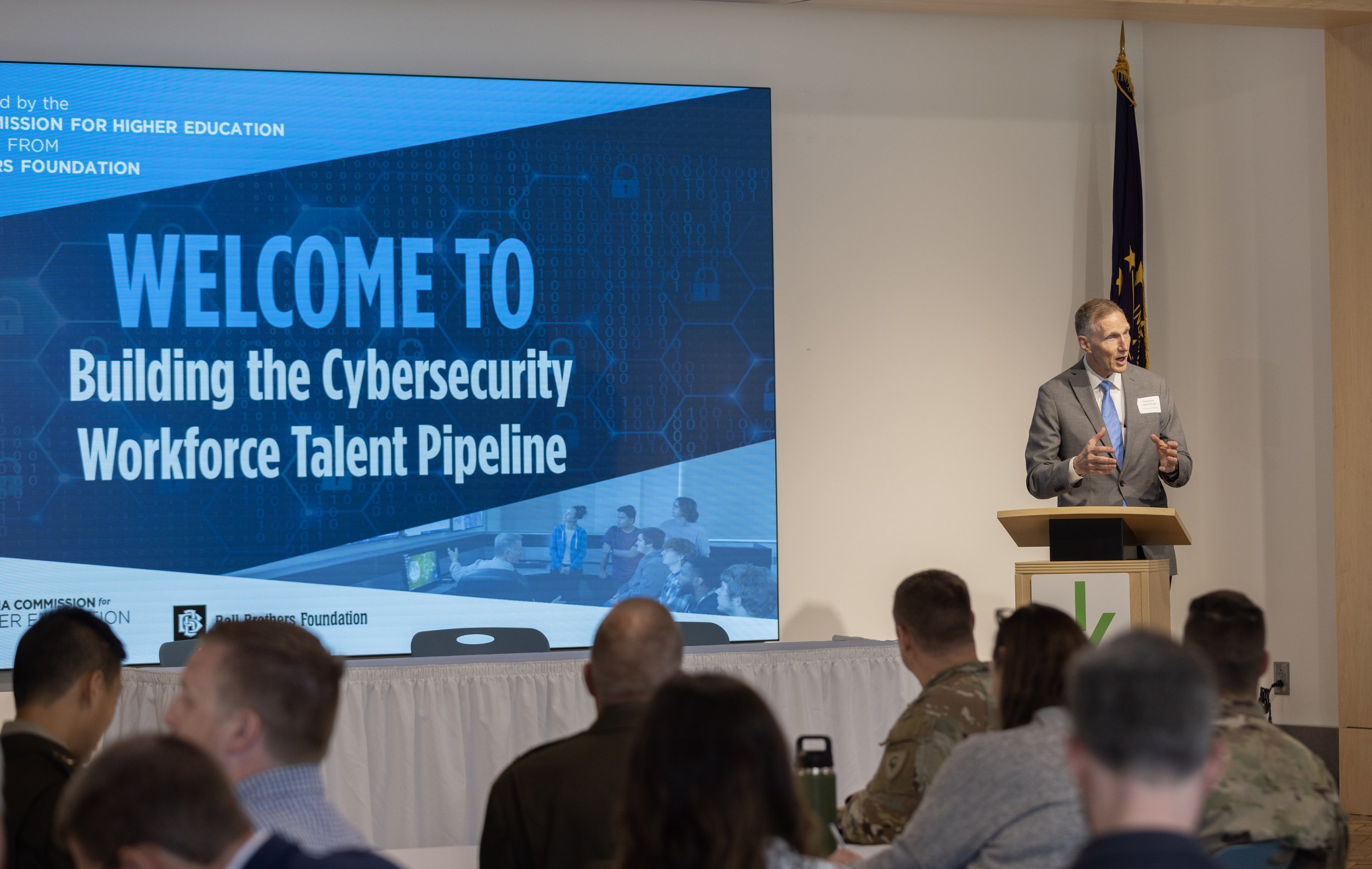
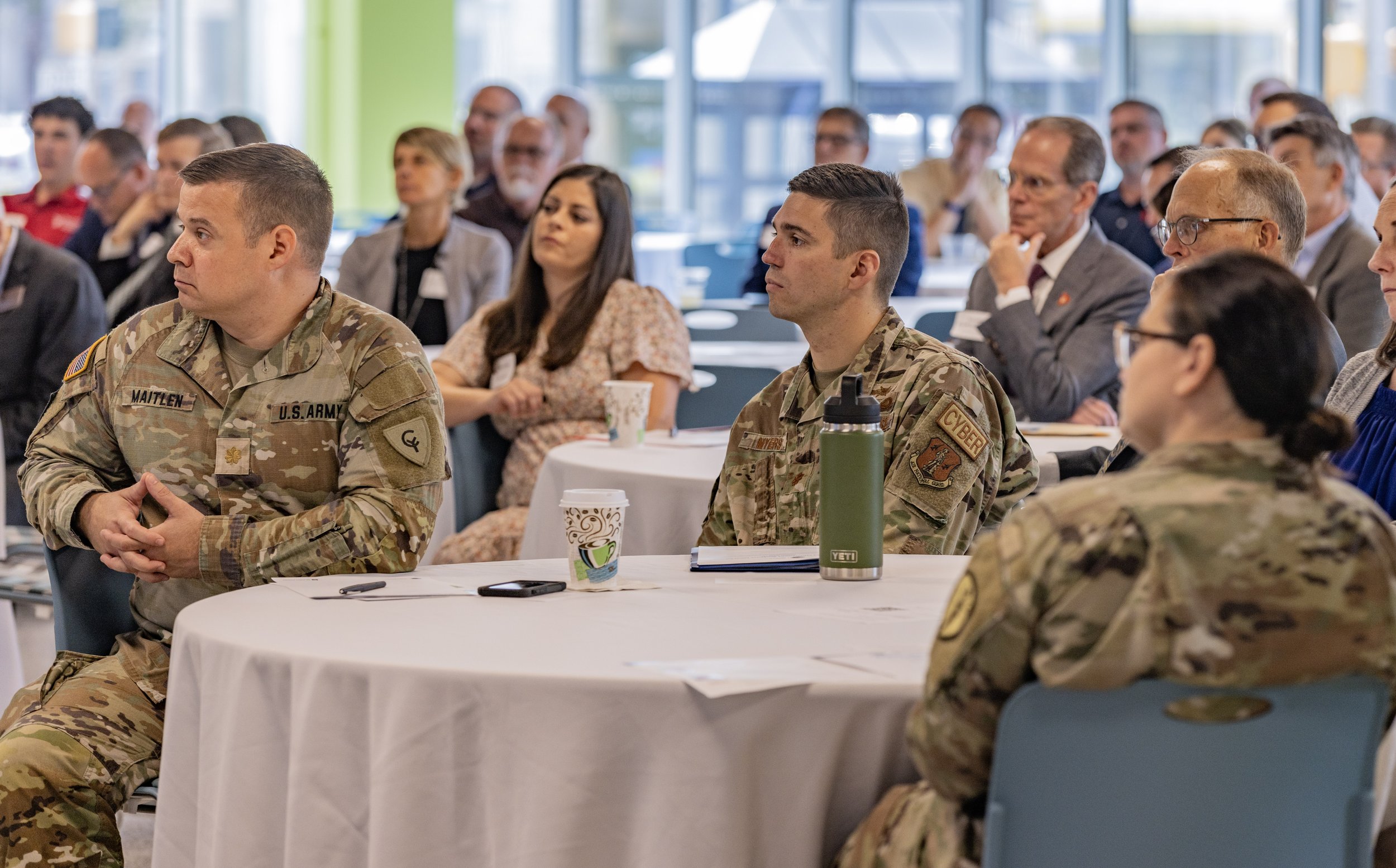
On July 24, nearly 100 leaders from higher education, the military, law enforcement, and the private sector convened in Muncie to explore the cybersecurity workforce talent pipeline. Hosted by the Indiana Commission for Higher Education with support from Ball Brothers Foundation, the convening drew participants from around the state interested in cybersecurity and cybercrime.
Drawing on his leadership experience at both the FBI and TSA, Anderson University President John Pistole opened the convening by facilitating a panel discussion about the state of the cyber workforce featuring:
Major General Dale Lyles, Indiana National Guard
Joel Thacker, Executive Director of Indiana Department of Homeland Security
Tracy Barnes, Chief Information Officer of Indiana Office of Technology
The day also included presentations from organizations in East Central Indiana that are working together to address cybercrime and cybersecurity including: the Delaware County Prosecutor’s Office, Ball State University, Ivy Tech Community College-Muncie, and Anderson University.
We’ve recapped the conversation below to share our top 3 takeaways:
-
The internet is deeply integrated into nearly every facet of our daily lives—our transportation networks, communication tools, emergency response systems, healthcare systems, water treatment plants—and the vulnerabilities are vast. A single data breach, software update gone awry, or link in a malicious email can lead to a domino effect of chaos. From the recent CrowdStrike meltdown that nearly halted nationwide travel, to the disaster declaration of an Indiana county due to a cyberattack, disruptive events will only grow more common—and potentially more dangerous. “This is an all-hands-on deck situation” and viewed as both a national security threat and a major issue for emergency management officials.
-
While there’s undoubtedly a need for more experts with deep technical cyber skills and training to provide both cyber “defense” and “offense,” broad talents are needed to position our local communities, state, and nation to take on the cyber challenges that lie ahead. Technical certifications and degree programs are critically important—and individuals need to have the aptitude and skills to work in the cyber field. But what also counts?
Attitude—Cyber is an ever-evolving field and the future workforce needs to be adaptable, resilient, and creative.
Strong Sense of Service above Self—In cyber careers, you’re “not just protecting your laptop, but you’re protecting something much bigger than you.”
Character—The demands of the field are tough, and the stakes are high. For those interested in the military’s cyber programs, obtaining security clearance is vital for service. More work is needed to help high school students understand what’s at stake if they’re interested in future service.
-
Responding to a real-time survey during the Summit, participants identified three interrelated challenges that stand in the way of building Indiana’s talent pipeline: student awareness and interest in the field, lack of K-12 feeder programs, and the need for more qualified faculty/staff. New changes to diploma requirements to require high school computer science courses offer a start, but much more is needed. Gamification and e-sports also offer a “window,” but more needs to be done to help students understand how their interests and skills can be turned into high-demand, high-wage jobs.
From your perspective, what’s holding us back from excelling in building a cyber talent pipeline?


So, Now What?
Like many of our attendees, we’re both optimistic about the future and realize that much more needs to be done to prepare for what lies ahead. When we asked participants about their impressions, here’s what they shared:
What one word comes to mind when you think about the current cyber workforce pipeline?

While there are no easy answers to the challenges of building a stronger workforce pipeline, here are a few practical resources:
-
Spearheaded by Anderson University, the ICN is a comprehensive, innovative workforce development initiative that brings together select Indiana higher education institutions offering cybersecurity majors. Members work together to meet the growing talent needs of the state’s public agencies and private businesses. ICN affiliates will run their own cybersecurity internship programs providing security services to local organizations and will partner with local K-12 schools to support the establishment of cybersecurity pathways. Colleges and universities interested in learning more about ICN should contact David Dungan at ddungan@anderson.edu.
-
For those interested in exploring military service, the Indiana National Guard recently established the 127th Cyber Protection Battalion, a first-of-its kind unit which trains Hoosier Citizen-Soldiers to become cyber operations specialists able to defend cyber networks and address growing cyber threats. The Guard is actively recruiting to fill positions.
-
The state of Indiana provides toolkits and other resources for residents, businesses, school districts, and local/county governments to identify vulnerabilities and strengthen security.
-
East Central Indiana is becoming a statewide leader in boosting the cyber workforce pipeline. Ivy Tech-Muncie has created custom courses to support law enforcement officers in cybercrime. Ball State University is creating the “Cardinal Academy of Digital Security and Education” to complement its existing cybersecurity degree programs. And Anderson University—in addition to offering degrees in cybersecurity and national security—is home to the “Center for Security Studies and Cyber Defense.” The CSSCD offers highly competitive paid internships for both Anderson University and Ball State University students.
Want to stay up to date about future developments? Sign up for Ball Brothers Foundation’s newsletter and follow us on social media.