
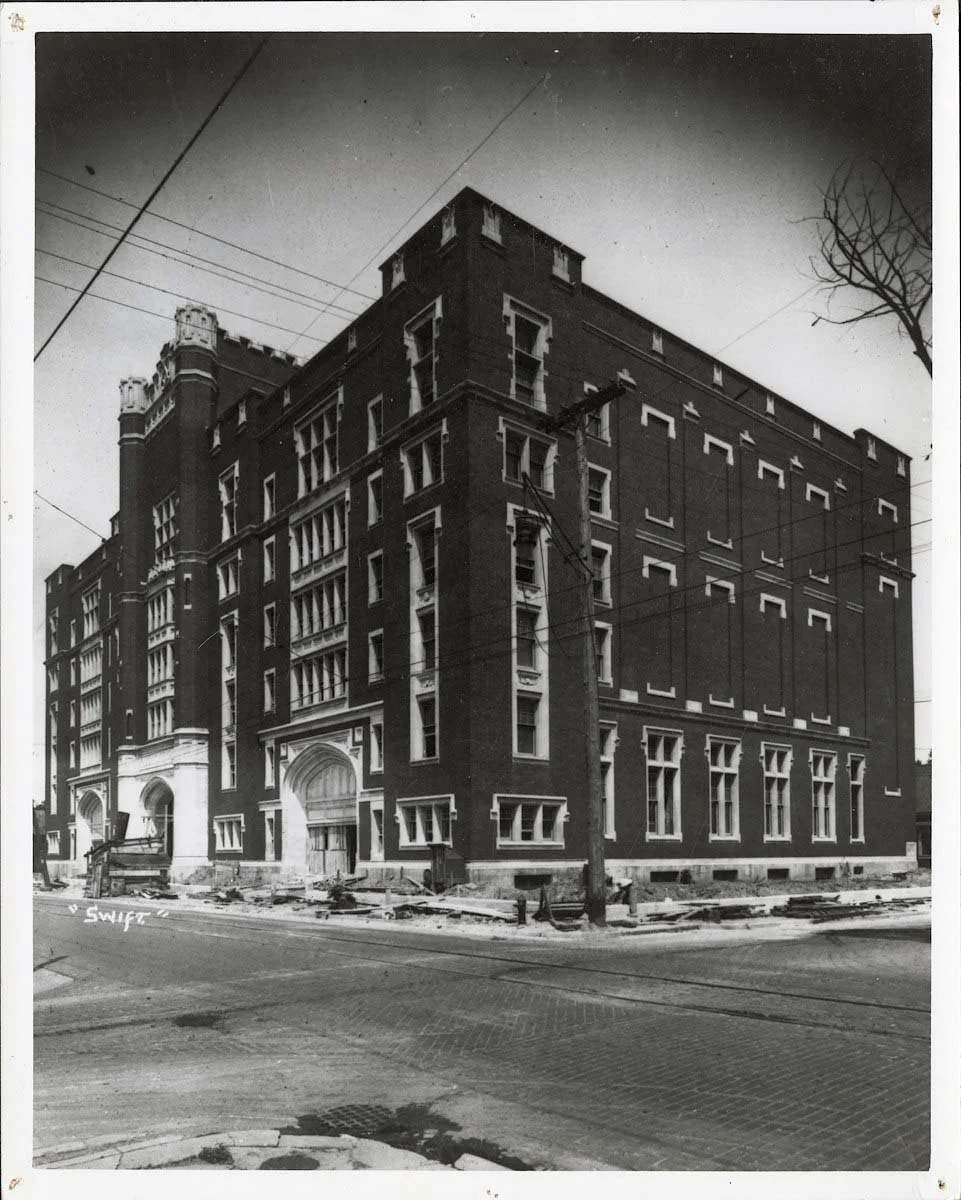
Muncie Masonic Temple
Photo: Delaware County Historical Society
For exactly one century, a defining Muncie landmark has stood at the corner of Madison and Main streets. With its distinctive Gothic Revival architecture, six stories, and rich history, the former Masonic Temple—which opened on November 26, 1926—is now home to Cornerstone Center for the Arts.
The building's story began several years earlier, as Muncie's Masonic organizations worked to raise funds needed for a new facility to accommodate growing memberships. In the early 1920s, local architectural firm Kibele and Garrard was commissioned to design the grand building. Construction began in 1923 with the placement of the building’s cornerstone. Completed three years later, the Masonic Temple represented an investment of approximately $1 million.
The original plans called for diverse meeting spaces for the numerous and varied Masonic organizations. Those plans expanded when the Ball brothers offered a $150,000 contribution to add a public auditorium to the building. Frank C. Ball envisioned a place where Muncie residents could enjoy high-quality entertainment. The new Masonic Temple offered an opportunity to make that vision a reality. The auditorium was named after Frank’s late brother, Edmund Burke Ball.
When the building opened in 1926, its interior featured over 20 large murals by artist Gustave A. Brand, commissioned for the temple's meeting rooms and main vestibule. The 1,320-seat Edmund Burke Ball Auditorium along with the colonnade ballroom provided community gathering spaces under ornate décor.
Together, the architecture, artwork, and public spaces made the building a distinctive addition to downtown Muncie and East Central Indiana.
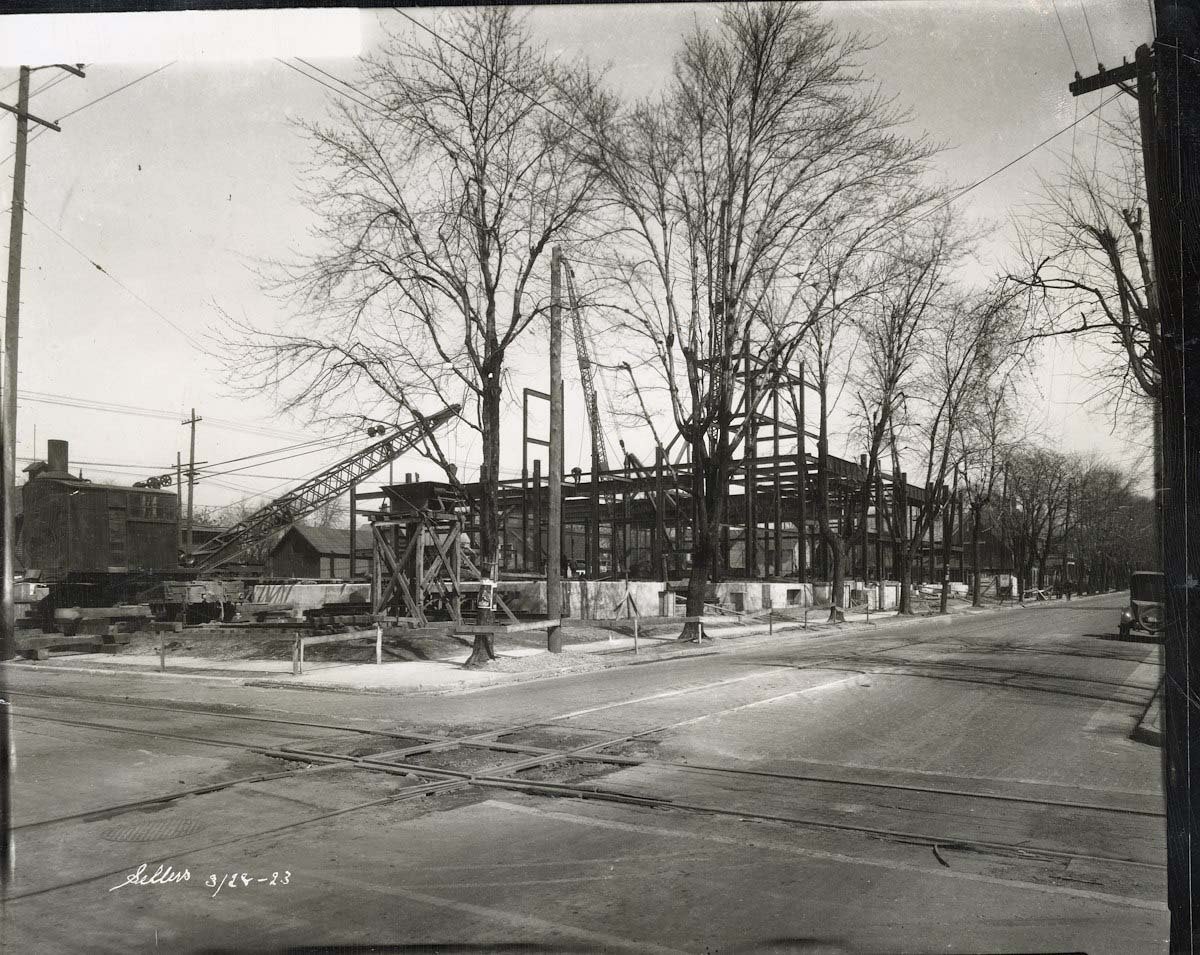
Construction of Muncie Masonic Temple, 1923
Photo: Delaware County Historical Society
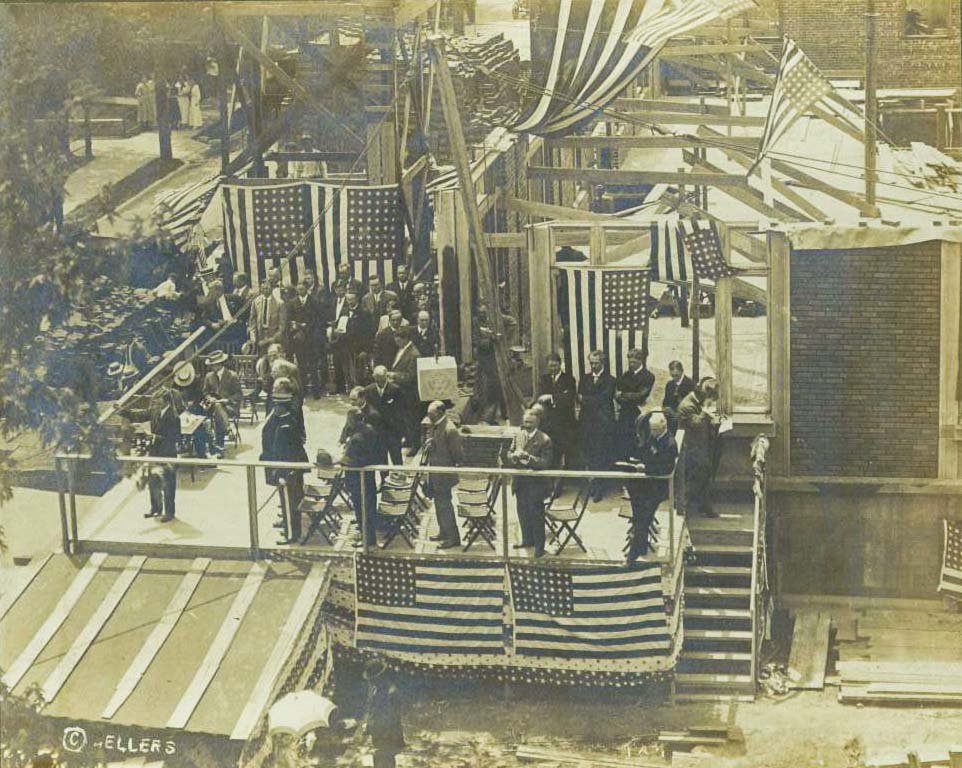
Muncie Masonic Temple cornerstone laying, October 30, 1923. Chair rows facing the left of the picture: 3rd row - Lucius L. Ball. Almost directly behind the cornerstone: Edmund B. Ball. On right side of image, standing 4th from left: William C. Ball. Photo: Minnetrista Museum Collection
Over the decades, the Masonic Temple remained an important part of the city's civic and social life. As the needs of the community and its organizations changed, so did the building's use and ownership.
In 2006, a merger of two local organizations created Cornerstone Center for the Arts which has since served as occupants, owners, and stewards of the building. While Muncie’s local Masons no longer have a formal presence in the building, their symbols and works of art remain throughout the premises in symbolic display of their traditions.
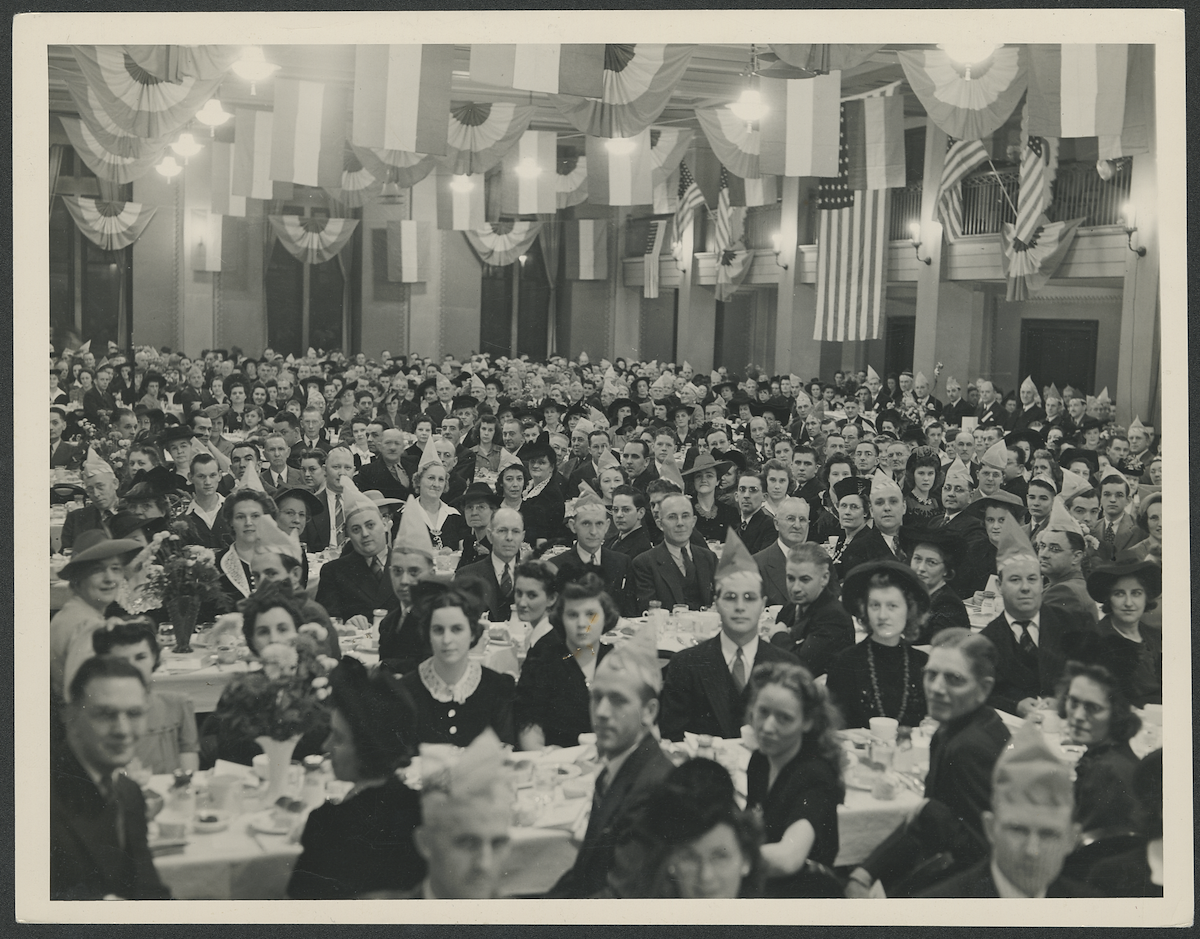
Banquet at Muncie Masonic Temple, 1942
Photo: Delaware County Historical Society
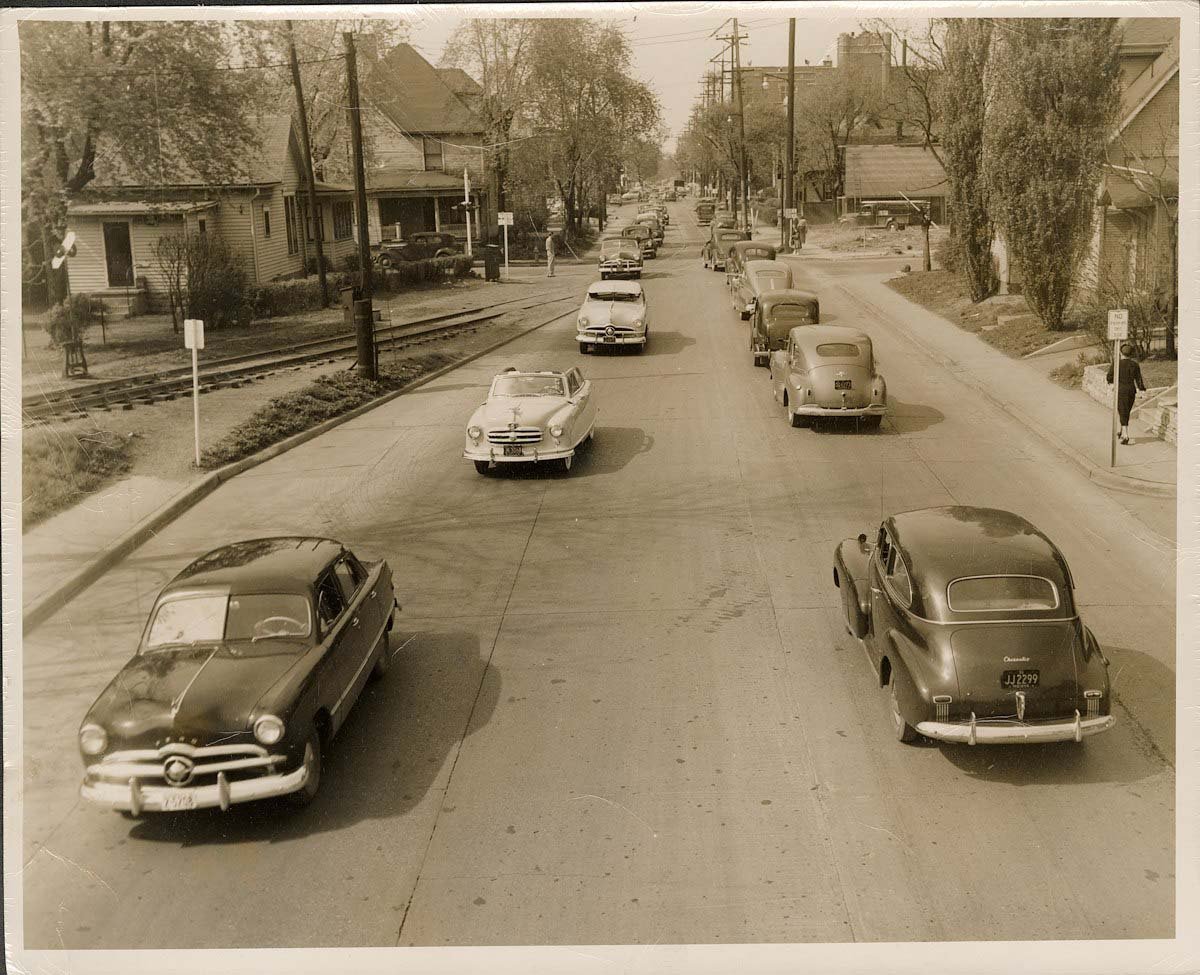
South Madison Street with Muncie Masonic Temple in background, 1950s
Photo: Delaware County Historical Society
Today, Cornerstone continues to offer classes, workshops, performances, exhibits, and community event spaces for people of all ages and interests. Over the past two decades, Ball Brothers Foundation funding to Cornerstone has totaled over $2 million in support of the organization’s programming, operations, and historic building repairs.
Maintaining a building of this size and history is no small undertaking. Through its programming, rentals, and community support, Cornerstone continues to seek ways to keep the landmark active and accessible while protecting the architectural character that makes it special.
Nearly 100 years after the Ball brothers helped make a public auditorium part of the building’s future, the building remains a place for people to gather, learn, create, and celebrate. Its purpose has evolved over time, but the idea behind that early contribution remains familiar: a strong community benefits from places where people can come together and experience something meaningful.